Traditional Floodlights vs Modern Linear Lighting for Padel Courts: Which System Fits Your Project?
- VKS
- May 11, 2026
- Blog
We get this question from contractors and club developers almost every week. The project brief says "padel court lighting," and immediately there are two camps: the ones who default to pole-mounted floodlights because it's what they know, and the ones who've seen high-end European padel clubs and want that clean perimeter linear look. Both systems work. The real question is what the project actually needs — and that answer depends on more than budget alone.
We've designed lighting for padel, tennis, and cricket facilities across Europe, the Middle East, Africa, and Oceania. Floodlights and linear perimeter systems are not interchangeable — they solve the same problem in fundamentally different ways, and the wrong choice shows up immediately on court.
1. The Layout Difference Is More Than Just Aesthetics
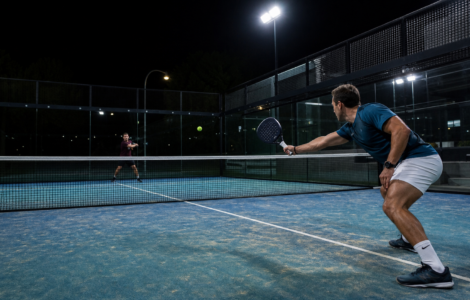
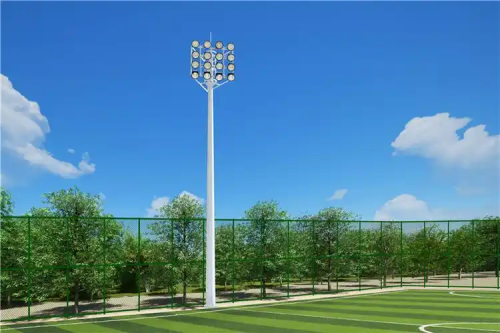
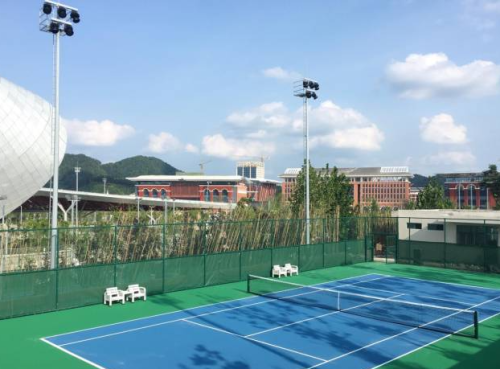
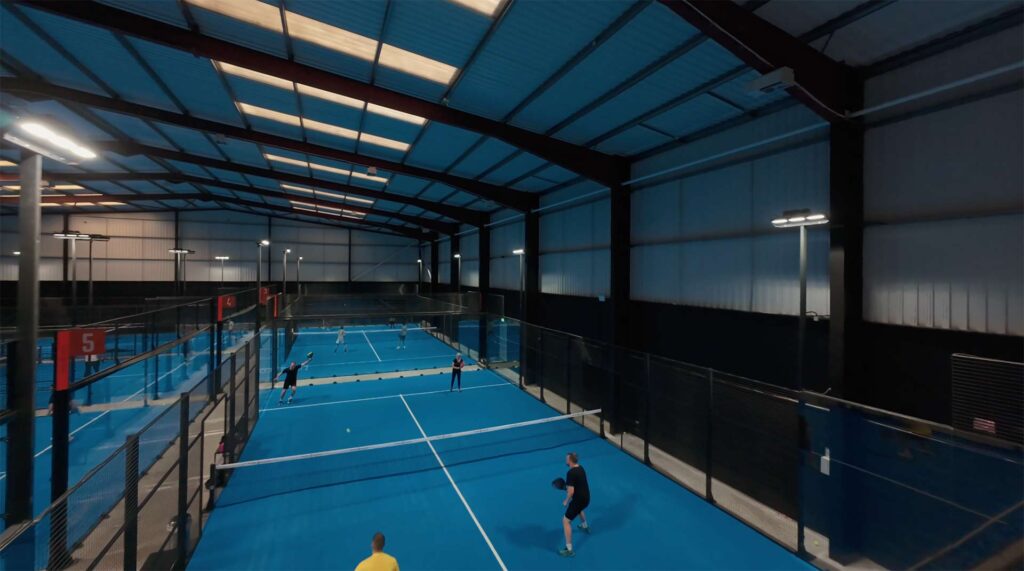
A typical floodlight installation uses 4 to 6 poles positioned at the corners and mid-points of the court. Each luminaire sits at height — usually 6 to 10 metres — and throws light across the playing surface from a concentrated source. The geometry is simple and the installation is fast. For an outdoor multi-court complex where speed and cost efficiency matter, this model makes clear sense.
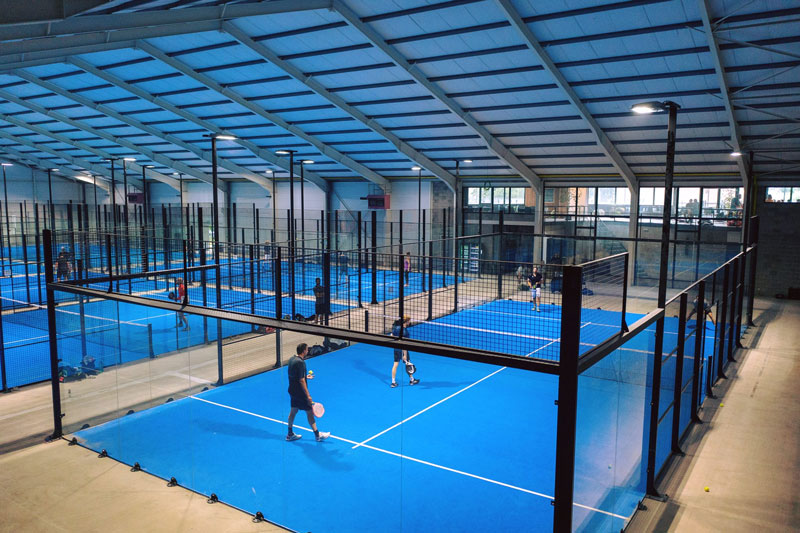
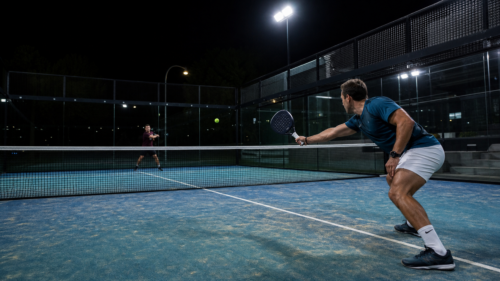
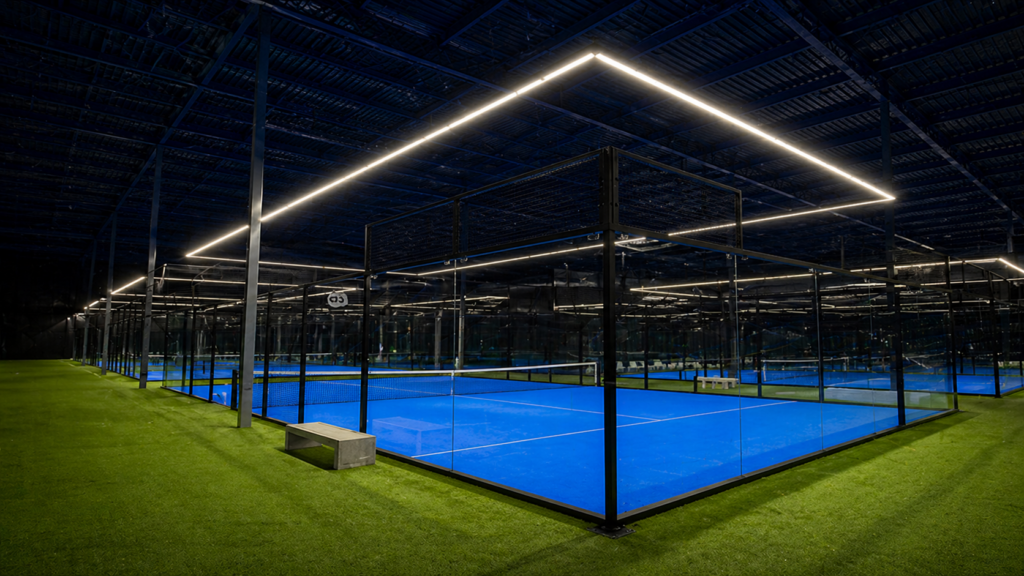
Perimeter linear lighting works differently. The luminaires are mounted along the top rails or structural frame surrounding the court — forming a continuous ring of light at lower mounting height. Individual unit wattage is lower, but because there are more of them distributed evenly, the illumination pattern changes character entirely. Instead of light coming from four or six strong points, it wraps around the court from all sides.
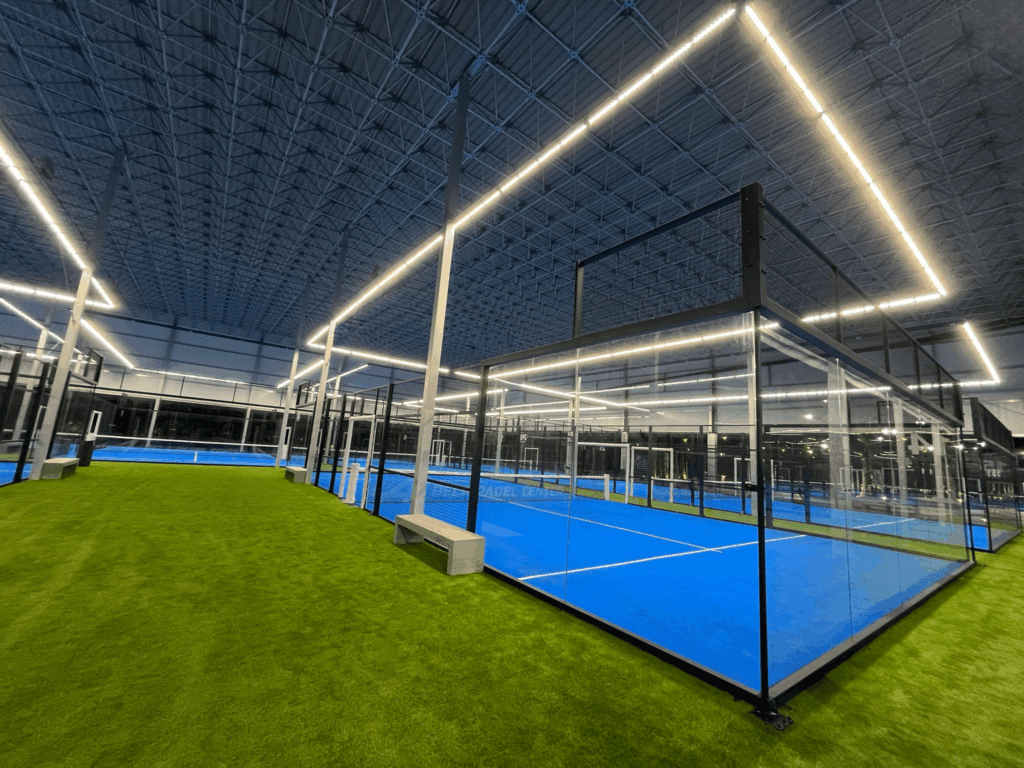
That distinction sounds simple, but it produces very different results in practice — particularly once you factor in shadow behaviour and glare.
2. Uniformity: Both Systems Can Perform, But the Path Is Different
Uniformity (u0) is the ratio of minimum to average illuminance across the playing surface. ITF guidelines for padel recommend u0 ≥ 0.7 for club-level play. Hitting that target is achievable with both systems — but how you get there differs.
With floodlights, achieving good uniformity requires careful photometric design. Beam angles, pole height, and fixture positioning have to be calculated precisely to avoid the classic problem: bright zones in the centre of the court and dimmer areas near the baselines. We model every floodlight project in DIALux before finalising the layout, and our designs consistently reach u0 above 0.7. That said, corner shadow zones remain harder to eliminate compared to perimeter systems.
Perimeter linear systems have a structural advantage here. Because the light sources are distributed evenly along all four sides (or at minimum the two long sides), the illuminance across the surface is naturally more consistent. There's no single dominant "hot spot." The uniformity figures tend to come out higher with less design effort — which is one reason we're seeing more premium indoor padel projects specify this system from the outset.
3. Glare Is the Factor That Separates the Two Systems Most Clearly
Padel players look up. On overhead shots, smashes, and lobs — which are central to how the game is played — a player's eye line goes directly toward the ceiling or the light sources. Glare at that moment is not a minor comfort issue. It affects reaction time, ball tracking, and the overall playing experience. For club owners, it's also a retention issue: players who leave squinting from their first session rarely book a second one.
GR (Glare Rating) is the standard metric for sports lighting. A GR below 50 is the baseline for sports use; high-end facilities typically target below 30.
Floodlights can meet these targets with anti-glare shields, precision optics, and careful aiming angles. However, because the light source is concentrated, the GR values are inherently more sensitive to observer position. Getting GR below 30 consistently across all positions on a padel court with floodlights requires serious optical engineering — it's doable, but not guaranteed with a standard product.
Linear perimeter systems have a fundamental advantage: the light source is diffuse and distributed. When a player looks up, they see a ring of low-brightness linear panels rather than several intense point sources. The GR values drop significantly. In our own indoor padel projects using perimeter linear systems, we record GR values below 10 across all observer positions — a performance level that's very difficult to replicate with a pole-mounted floodlight design.
📊 Real Project Data — Indoor Padel Court, Perimeter Linear System
The following figures are from a DIALux simulation we completed for an indoor padel project using our perimeter linear LED system:
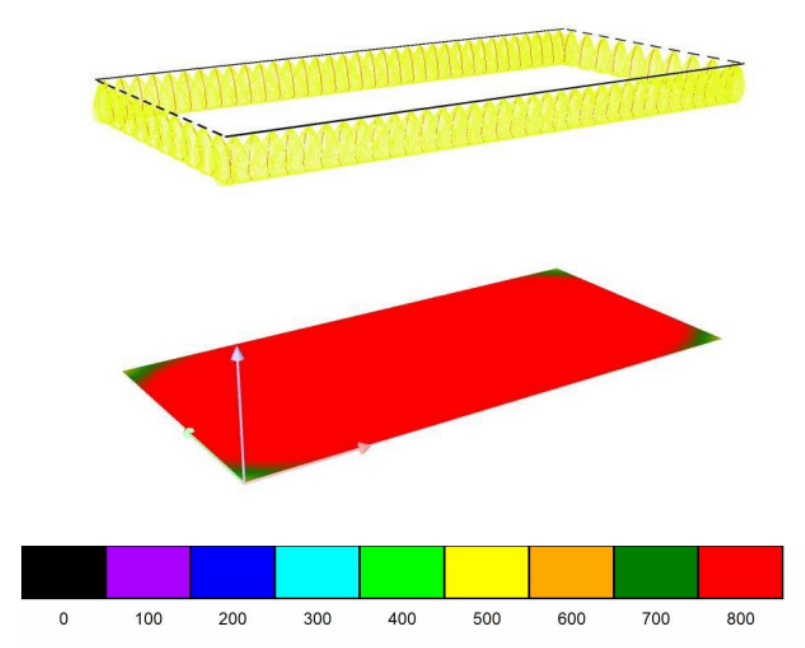
| Parameter | Result | Target |
|---|---|---|
| Average Illuminance (Eav) | 918 lx | ≥ 500 lx (club) / ≥ 750 lx (competition) |
| Minimum Illuminance (Emin) | 740 lx | — |
| Maximum Illuminance (Emax) | 987 lx | — |
| Uniformity Ratio (u0 = Emin/Eav) | 0.81 | ≥ 0.70 |
| Emin / Emax Ratio | 0.75 | — |
| Observer | Position X/Y/Z (m) | GR Max |
|---|---|---|
| GR Observer 1 | 2.7 / 7.3 / 1.5 | < 10 |
| GR Observer 2 | 2.4 / 5.1 / 1.5 | < 10 |
| GR Observer 3 | 2.3 / 2.0 / 1.5 | < 10 |
| GR Observer 4 | 6.0 / 3.7 / 1.5 | < 10 |
Simulation prepared in DIALux. Full report available on request.
4. Floodlights vs Linear: Honest Advantages and Limits of Each
Traditional Floodlights
- Lower initial product cost
- Faster, simpler installation (4–6 poles)
- Suitable for outdoor and open-air courts
- Good uniformity achievable with proper design
- Fewer luminaires to maintain
- GR more dependent on optical design and aiming
- Better for budget-conscious or multi-court outdoor projects
Perimeter Linear System
- GR < 10 achievable — genuinely exceptional
- High uniformity with less design sensitivity
- Minimal shadows across the full court
- Clean visual appearance — strong for social media, club branding
- Preferred by high-end European and Middle East clubs
- Higher number of luminaires; installation more complex
- Requires appropriate structural framing
Our honest position: We supply both systems and design both to a high standard. If a client comes to us with a budget outdoor padel project, we won't push them toward linear just because it looks premium — that doesn't serve them. If a client is building a high-end indoor club in Europe or the Gulf, we'll show them clearly why perimeter linear lighting is now the direction most comparable projects are taking.
5. Market Positioning: Which Projects Lean Which Way
Floodlights remain the practical standard for government sports facilities, school courts, public parks, and multi-sport outdoor complexes where cost control is a real constraint. They also work well for cricket and tennis projects where pole heights, coverage areas, and maintenance access are the primary design drivers.
Perimeter linear systems have been gaining significant ground in a specific segment: premium indoor padel clubs, particularly in Spain, the Netherlands, the UK, and increasingly in the UAE and Saudi Arabia. These are clubs where the court photograph is part of the marketing, where members are paying for a premium experience, and where the lighting design has to look as intentional as the rest of the fit-out.
The trend is clear. Over the last two years, we've seen a consistent shift in specifications from high-end padel developers — more of them arrive asking specifically about perimeter linear systems rather than exploring the option. That's a market signal worth paying attention to if you're designing courts in those regions.
6. Maintenance Realities Neither Side Likes to Talk About
Floodlight systems have fewer luminaires, which makes routine inspections straightforward. When a single unit fails, however, the loss is visible — a pole producing no output creates an obvious dark zone that affects play immediately.
Linear perimeter systems have more luminaires overall, which means maintenance schedules need to account for a larger number of units. The upside is redundancy: if one section fails, the overall illuminance drops slightly but the playing surface remains usable. For a commercial club running courts 12+ hours a day, that resilience has real operational value.
We build our linear systems using modular driver configurations for exactly this reason — replacing a failed driver section doesn't require taking down a whole run of luminaires.
7. How We Approach the Design Process for Both Systems
Every project we quote starts with a DIALux model. We don't send a generic fixture list — we model your specific court dimensions, ceiling height (for indoor), pole positions, and target illuminance levels, and we send you the full simulation report before you commit to anything.
We work with contractors and investors across padel, tennis, and cricket — from single-court club installations to multi-court facility developments. If your project is at the specification stage, the simulation is where we start. The numbers tell you what's right for your situation more clearly than any product brochure.
Frequently Asked Questions
What is the standard illuminance level for a professional padel court?
For competition-level padel, the ITF recommends a minimum maintained average illuminance (Eav) of 500 lx for club play and 750–1000 lx for televised matches. Our perimeter linear system in one recent indoor project achieved Eav 918 lx with a uniformity ratio (u0) of 0.81, which exceeds most club-level requirements.
What GR value is acceptable for padel court lighting?
GR below 50 is the general threshold for sports facilities. For high-end padel and indoor sports, a GR under 30 is preferred. Our linear perimeter system records GR values below 10 across all observer positions — a figure that is very difficult to achieve with standard floodlight layouts.
Can traditional floodlights achieve good uniformity on a padel court?
Yes, with the right lighting design they can. Our floodlight projects regularly achieve u0 above 0.7. The key difference is that floodlights tend to produce higher GR values than linear perimeter systems.
How many floodlights are typically needed for one padel court?
A standard single padel court (10m × 20m) typically uses 4 to 6 pole-mounted floodlights at 200W–400W each. A linear perimeter system uses more luminaires at lower individual wattage, distributed along the long sides or full perimeter of the court structure.
Which lighting system is better for a high-end padel club?
For high-end clubs — especially in Europe or the Middle East where court aesthetics and player experience are central to the brand — perimeter linear lighting is the stronger choice. The visual consistency, near-zero glare, and clean installation profile align with what premium clubs expect.
Do you provide DIALux simulation files before ordering?
Yes. We provide DIALux simulation files for all padel, tennis, and cricket lighting projects. Clients receive full reports including Eav, Emin, Emax, u0, and GR observer data before committing to a purchase.
Tell Us About Your Project
Whether you're pricing a budget outdoor padel complex or specifying a high-end indoor club — send us your court dimensions and target spec. We'll run the simulation and show you what both systems produce on your specific layout.