How Does Football Field Lighting Reduce Dark Zones?
- VKS
- Oct 02, 2026
- Blog
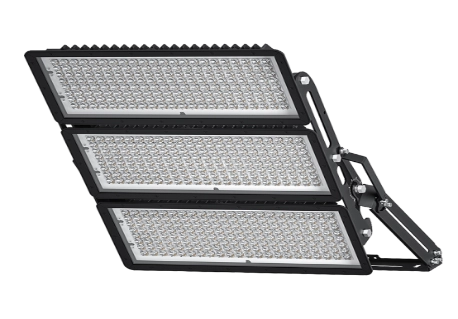
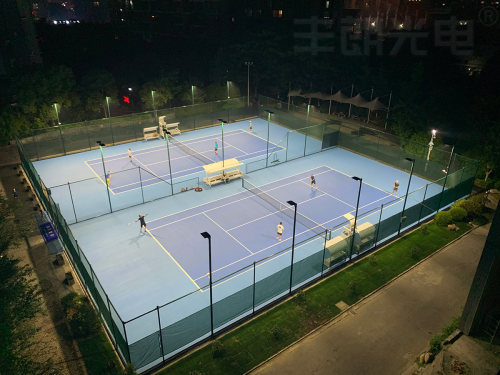
A football field can look bright from the stands and still have dark patches near the corners, goal lines, or touchlines. Those gaps make it harder to follow the ball and can affect player confidence and safety. The solution is not simply to install brighter lamps. Good football field lighting combines careful fixture placement, suitable beam optics, uniform coverage, and accurate aiming. These principles also reflect a wider industry shift: recent VKS guidance for multi use venues highlights flexible lighting levels, glare control, and spill light management alongside basic brightness.
What Causes Dark Zones on a Football Field?
Dark zones appear when light does not reach the playing surface evenly. A few powerful floodlights may create bright spots directly beneath or opposite the poles while leaving weaker areas between beams. Shadows from players and structures can make the difference more noticeable.
Common causes include:
- Poor fixture spacing:Light beams fail to overlap enough across the pitch.
- Incorrect beam angles:A beam may be too narrow, too wide, or aimed at the wrong area.
- Unbalanced aiming:Fixtures pointed toward the center can leave corners and touchlines underlit.
- Aging or mismatched equipment:Older lamps may lose output at different rates, creating uneven coverage.
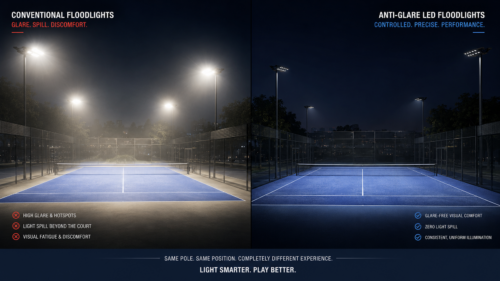
- Glare and spill:Bright light in a player’s line of sight can make nearby areas seem darker by comparison.
The goal is balanced coverage across the full field, not a high reading at one point. Lighting designs consider average illuminance, minimum levels, uniformity, glare, and the needs of players, officials, spectators, and cameras. CIE guidance also stresses that controlling unwanted outdoor light starts with appropriate design and distribution.
How Football Field Lighting Reduces Dark Zones
A well planned system addresses the pitch as a set of lighting zones. Each fixture contributes to more than one area, and overlapping beams soften the drop off between brighter and dimmer points.
Start With the Field Layout
Before choosing fixtures, the design team needs the pitch dimensions, pole locations and heights, nearby buildings, and intended level of play. A community training ground and a broadcast stadium have different lighting needs. A photometric layout can show where beams land and whether field edges receive enough light before installation begins.
This step helps identify problem areas such as the goalmouth, corners, or the strip between the touchline and the first row of seating. It also helps avoid a common mistake: adding more wattage before finding out whether the existing problem is caused by poor aiming or unsuitable optics.
Choose the Right Beam Distribution
Optics shape how light leaves a luminaire. Narrow beams can send light farther from high poles, while asymmetric distributions can direct more light toward a specific part of the pitch. A suitable mix helps fill gaps without sending unnecessary light into the sky or nearby homes.
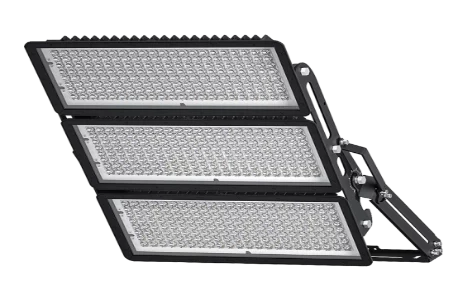
Fixtures also need to be aimed as part of the whole layout. Overlapping beams can reduce abrupt changes in brightness, while careful aiming limits glare. For large outdoor projects, VKS offers high output LED stadium lighting with adjustable modules and symmetric or asymmetric beam options. The right configuration depends on the project design, not just the fixture’s maximum output.
Check Coverage Across the Whole Pitch
Measurements should cover the center, goal areas, sidelines, and corners. If readings vary sharply, the team may need to adjust aiming, change beam distributions, or review fixture positions. A lighting simulation can help predict the pattern; measurements after installation can confirm how the system performs in the real venue.
Uniform lighting matters in regular play, but it is also important for video. Players, spectators, and cameras need to follow movement across the field, not just in its brightest area.
Materials and Features That Support Consistent Performance
Lighting quality can change over time if a fixture runs too hot, its optical parts degrade, or its housing cannot handle outdoor conditions. Materials do not remove the need for good design, but they support steady operation and reduce maintenance pressure.
Aluminum Housing and Heat Management
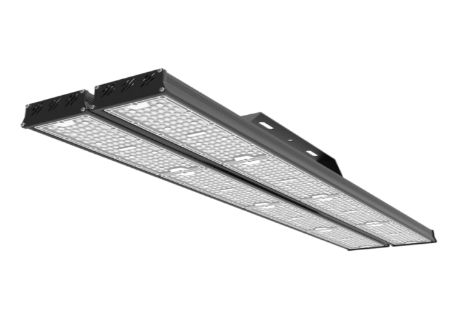
Many outdoor sports luminaires use aluminum housings because aluminum conducts heat away from the LED components. Some models also use finned heat sink structures to increase the surface area available for cooling. Managing heat helps a fixture maintain stable operation over long playing hours.
Outdoor units also need protection from rain, dust, impacts, and temperature changes. Depending on the model, VKS fixtures use aluminum housings with PC lenses or tempered glass, along with protective ratings intended for outdoor environments. These details should be checked against the product specification and site conditions rather than assumed to be identical across every model.
Lenses, Cutoff, and Controls
The lens and reflector determine where light goes. Precise optical control can help reduce unwanted spill, while cutoff designs limit light directed above the useful area. The result can support clearer playing conditions and reduce disturbance beyond the field.
Controls add another practical option. Selected fixtures support dimming or scene control, allowing operators to use different settings for training, matches, and maintenance. This is especially useful at venues with changing schedules: the field does not need to run at full output for every activity.
Product Types and Where They Are Used
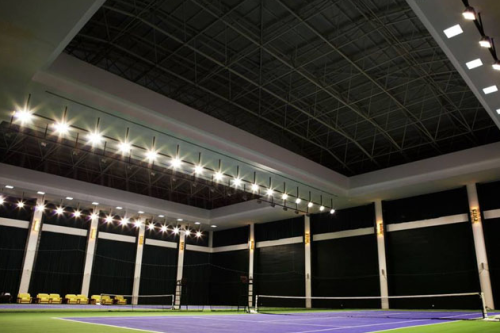
Football lighting is one part of a broader outdoor lighting plan. The main pitch may need high output sports floodlights, while the surrounding roads, parking areas, public spaces, or remote paths require different products.
- Sports floodlightsserve football fields, stadiums, training grounds, and multi sport venues.
- Highmast floodlights suit large outdoor areas such as stadium surroundings, logistics zones, and seaports.
- Urban lightingsupports streets, plazas, parking areas, and public spaces.
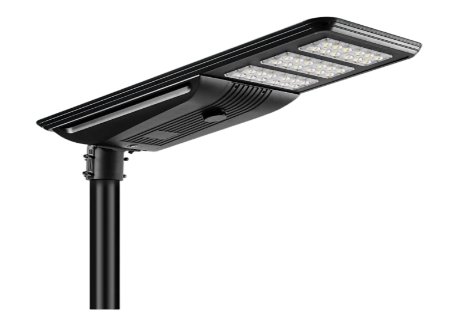
- Solar lightingcan serve paths, parks, and off grid areas where connecting to the electrical grid is difficult.
At VKS, we provide LED sports lighting for sports venues and outdoor and high mast lighting for larger open areas. Our wider range also includes LED urban lighting and LED solar lighting. These categories can work together across a complete site, from the football pitch to its access roads and public areas.
Facility operators may also search for led seaport lighting or urban led lighting solutions when planning nearby infrastructure. Those applications have different requirements from a pitch, but they share a need for controlled distribution, durability, and light where it is needed.
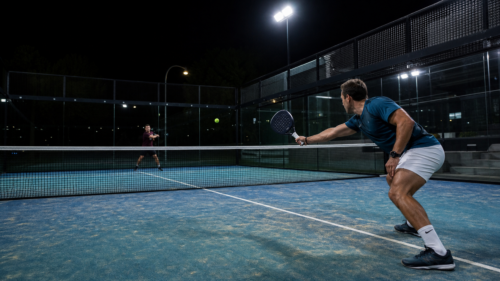
Padel is another growing court application, with different dimensions and viewing angles from football. For padel sport, the correct padel court lighting must account for the enclosed playing area, glass reflections, and player sightlines. It is a useful reminder that sports lighting should be designed around the activity rather than treated as one size fits all.
What to Consider Before Upgrading
An LED retrofit can be a good opportunity to correct dark zones, but replacing lamps one for one may preserve the same uneven pattern. First review the existing pole arrangement, mounting height, wiring, fixture condition, and measured light levels.
Ask the project team to confirm:
- Which areas currently have the lowest illuminance?
- Are the fixtures suitable for the pole height and field geometry?
- Will the design control glare and spill light?
- Does the venue need separate settings for practice and matches?
- Can the installation be checked with measurements after aiming?
The vks company approach is to consider product selection alongside lighting design and project requirements. That matters because a reliable result depends on the complete layout, not only the fixture model.
Conclusion
Dark zones on a football field are usually a distribution problem, not simply a lack of power problem. Correct beam selection, well planned fixture positions, overlapping coverage, and careful aiming can bring light to goal areas, corners, and touchlines without creating harsh glare or unnecessary spill. Materials such as aluminum housings, durable lenses, and effective heat management help outdoor fixtures maintain performance, while controls can match output to different activities. For a new installation or retrofit, begin with the pitch layout and a lighting assessment, then verify coverage after installation. At VKS, we work with sports and outdoor lighting products for projects that need a coordinated approach.
FAQs
Q: How does football field lighting reduce dark zones?
A: By using suitable beam optics, planned fixture positions, overlapping coverage, and accurate aiming across the full pitch.
Q: Do brighter floodlights always remove dark areas?
A: No. Poor distribution or aiming can leave dark zones even when fixtures have high output.
Q: Can lighting controls reduce dark zones?
A: Controls adjust brightness by activity, but even coverage depends on fixture layout, optics, and aiming.