Is a 230W LED Floodlight for Sport Pitch Bright Enough?
- VKS
- Oct 09, 2026
- Blog
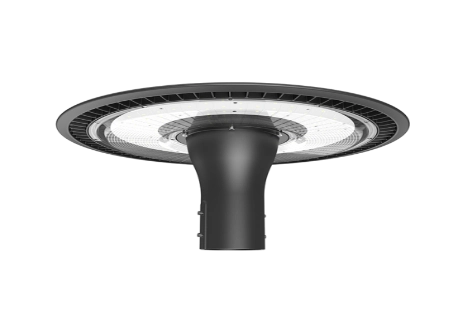
A 230W LED floodlight can be bright enough for some sports areas, but wattage alone cannot answer the question. The result depends on the pitch size, mounting height, beam distribution, number of fittings and the required playing standard. A compact training area may need far less light than a stadium or a court used for televised matches.
There is another important point: bright light is not automatically good sports lighting. Players need to see the ball clearly across the whole playing area, without distracting glare, dark patches or excessive light spilling into nearby homes. So, before choosing a 230W LED floodlight for sport pitch use, look at the complete lighting design, not just the number on the product label.
What determines whether 230W is enough?
Wattage measures electrical power consumption, not how much useful light reaches the ground. Two 230W floodlights can produce different light outputs and distribute light very differently. A wide beam may suit a low mounting position, while a narrower or asymmetric optic can direct light farther across a larger pitch.
For an initial comparison, a fixture producing 150–180 lumens per watt would deliver roughly 34,500–41,400 lumens at 230W. That estimate is only a starting point. The light reaching each part of the playing surface also depends on aiming, pole positions, mounting height and optical losses.
Before selecting a fixture, consider:
- Playing area:A small practice space and a full-size football pitch have very different coverage needs.
- Use:Casual recreation, club training and competitive matches call for different light levels.
- Uniformity:Players need consistent visibility across the pitch, not a few bright spots surrounded by dim areas.
- Glare and spill:Poor aiming can make it harder to track a ball and can send unwanted light beyond the venue.
- Existing equipment:A retrofit should be designed around pole locations, mounting limits and the current electrical system.
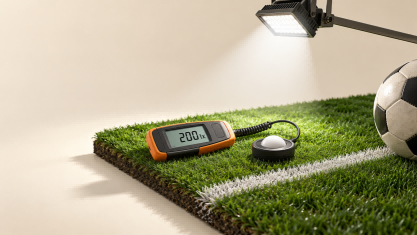
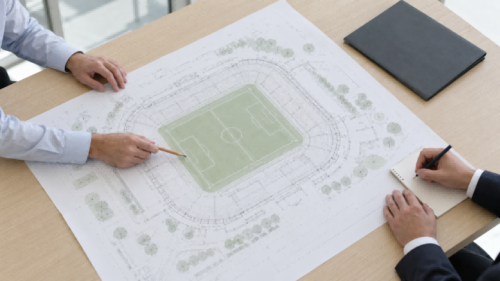
For these reasons, a lighting simulation is more useful than choosing a fixture by wattage alone. It shows expected illuminance and uniformity across the playing area, and helps the project team compare different layouts before installation.
Sports lighting is about visibility, not brightness alone
The right lighting supports quick decisions and safe movement. Players must follow fast-moving balls, judge distance and see other players clearly. Coaches and spectators also need comfortable sightlines. Good LED sports lighting therefore balances light levels with uniformity, glare control and the intended level of play.
This balance is part of a wider shift in sports lighting. Facility owners are paying more attention to precise optics, dimming and control of light spill, particularly when a venue sits near homes or environmentally sensitive areas. Current DarkSky outdoor sports lighting guidelines address uplight, targeted distribution, glare and operating controls. In practical terms, the aim is to light the game area without unnecessarily lighting the surrounding neighborhood or night sky.
Broadcast use adds another layer. The International Padel Federation’s 2025 tour rulebook calls for even court lighting and specifies at least 1,000 lux of vertical illuminance for TV broadcasts. That is a broadcast requirement, not a general target for every recreational pitch. The right design depends on the sport, venue and event requirements.
Materials and features built for outdoor use
Sports floodlights work in exposed locations, where rain, dust, heat and impact can shorten the life of poorly protected equipment. For this reason, material choices and construction matter alongside light output.
VKS outdoor floodlight ranges use die-cast aluminum housings to support structural strength and heat dissipation. Depending on the series, optical components may include PC lenses or tempered glass covers, with powder-coated finishes for outdoor protection. Several sports-lighting products are rated IP66 for protection against dust and powerful water jets, and IK08 for impact resistance.
Thermal management is especially important. LEDs and drivers produce heat during operation, and effective heat transfer helps maintain stable performance over time. A well-designed housing helps move heat away from the LED components; the fixture’s rated life still depends on operating conditions, installation and product specifications.
Optics also affect durability in practice. A beam shaped for the pitch can reduce wasted light and avoid the temptation to compensate for poor coverage by adding more fittings. Some VKS sports-lighting ranges offer symmetric and asymmetric beam options, with control choices such as 1–10V, DALI or DMX512 depending on the model.
Choosing a fixture for a court or pitch
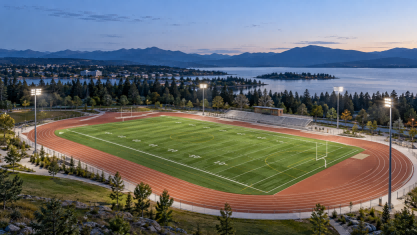
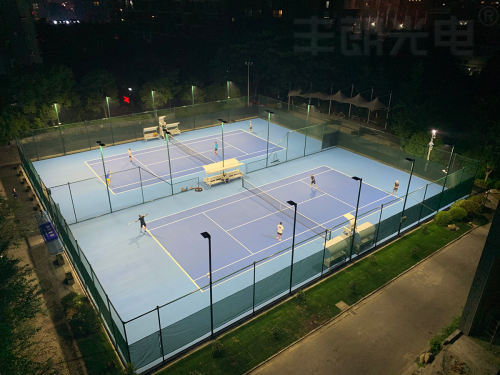
Sports venues vary too much for one floodlight to suit every job. A compact recreational court may use lower-power fittings distributed around the court, while a large outdoor stadium typically needs higher-output luminaires mounted on carefully positioned poles.
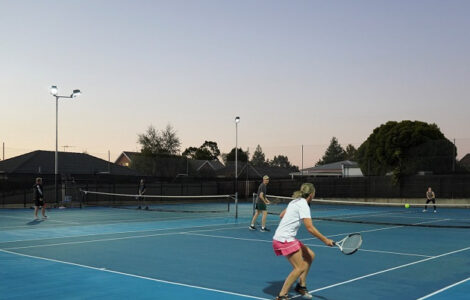
Padel is a useful example. Correct padel court lighting depends on the court layout, pole positions, mounting height, playing level and whether the facility is indoor or outdoor. For a recreational venue, the design priority may be comfortable, even visibility. A court used for a televised tournament has different requirements, including vertical light for cameras.
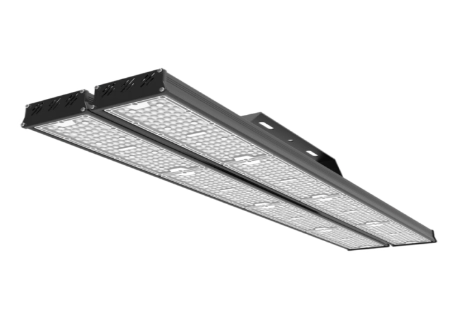
VKS has documented an outdoor padel project using 16 units of 320W linear high bay lights, with an average illuminance of 500 lux across the playing area. That is a project example, not a universal specification or a promise that a 230W fitting will produce the same result. It shows why fixture count, placement and optical design need to be considered together.
For smaller or multi-use outdoor facilities, a lower-wattage fixture may be appropriate when calculations confirm the required light levels. For a large pitch, the same fixture may work as one part of a broader system rather than as a standalone solution.
Where related lighting categories fit
Sports floodlights are only one part of an outdoor lighting plan. Ports, parking areas, public squares and streets each need a different light distribution, mounting arrangement and control strategy.
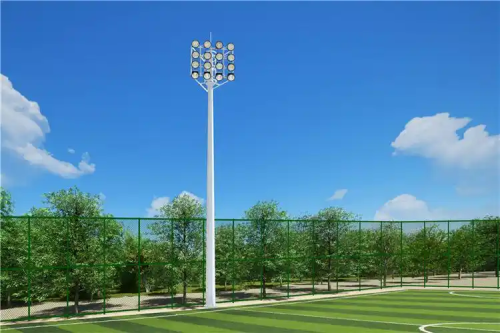
For large open spaces such as industrial yards or cargo areas, LED outdoor and high-mast lighting can be specified for wide-area coverage. Port operators may also need dedicated solutions for working areas and circulation routes, so led seaport lighting should be designed around site geometry and operating tasks rather than treated as a sports-lighting application.
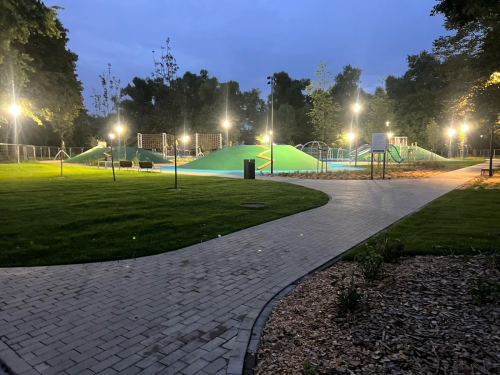
Around a venue, LED urban lighting and urban led lighting solutions can cover pedestrian routes, access roads and public spaces. Solar lighting may suit paths or locations where grid access is limited, although battery capacity and local sunlight conditions need to be considered.
These categories share some design principles with sports lighting, including efficient operation and control of where light falls. Their performance targets, however, are not interchangeable with those for a playing surface.
How to choose the right system
Start with the project requirements, then match the equipment to them. A designer or supplier will typically need the pitch or court dimensions, pole positions, mounting heights, the level of play, control preferences and any limits on spill light. For an existing venue, include details of the current fittings and poles.
A photometric plan can show whether a 230W LED floodlight for sport pitch use meets the target across the full playing area. It can also reveal glare risks, uneven coverage or unnecessary light beyond the boundary. That makes it easier to compare options on useful performance rather than wattage alone.
At VKS, we provide sports and outdoor lighting products alongside project support, including lighting design and simulation. Our solutions cover sports facilities as well as outdoor, urban and solar applications, so the specification can reflect how each area will actually be used.
Conclusion
A 230W LED floodlight may be bright enough for a small or recreational sports area, but there is no reliable answer from wattage alone. The pitch dimensions, mounting height, beam optics, number of fittings and required playing level all affect the result. Uniformity and glare matter just as much as total light output: a bright spot does little for players if other parts of the court remain dim.
Ask for a lighting calculation before choosing fixtures. It can show whether the proposed layout meets the project’s light-level targets, supports visibility and limits spill beyond the playing area. VKS helps customers assess these factors through product selection and lighting design support. A well-planned system makes the game easier to see while using light where it is needed.
FAQs
Q: Can you still buy a 230W LED floodlight for a sport pitch?
A: Yes. Availability varies by product range, so check the current specification and project suitability.
Q: Is a 230W light enough for padel sport?
A: It depends on court layout, mounting height, fixture count and the required playing or broadcast level.
Q: What matters more than wattage in sports lighting?
A: Useful light output, beam distribution, uniformity, glare control and the lighting target matter most.