Which Athletic Field Lighting Fits Multiuse Venues?
- VKS
- Sep 04, 2026
- Blog
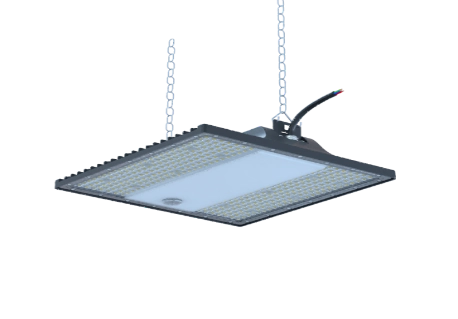
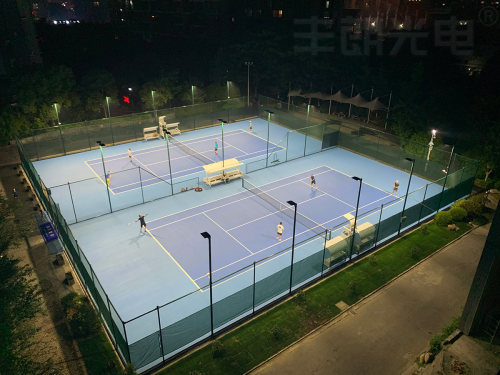
A shared sports space seldom handles just a single game. It rarely hosts only one type of crowd. It also avoids sticking to a single brightness level. On Monday, a local school might hold football practice there. Then, on Friday night, a big community match could take place. During the weekend, this exact same field might host track events or rugby. It could even fit concerts, town festivals, or youth training camps. Because of this variety, picking the best athletic field lighting involves much more than basic brightness.
Today, property owners require very flexible illumination. The lights must work well for players and fans. They also need to satisfy TV crews, nearby residents, and repair teams all at once. Proper fixtures have to make the ball easy to see. They must cut down on harsh glare and stop extra light from spilling over. They should also cut power costs and shift easily between event types. Lately, the industry cares a lot about dark-sky-friendly sports lighting. Experts also value smart controls and all-season field usage. This focus makes choosing the right setup a huge deal. Sensible outdoor sports lighting guidance now highlights proper shields and exact aiming. It also values dimming tools, timers, and lower light pollution. Outdoor sports lighting guidance points in this exact direction. Upgraded lenses boost field performance. At the same time, they drop annoying glare for the local neighborhood.
For site managers, the ideal solution rarely relies on just one lamp style. Instead, it involves a complete lighting system. This setup is built around the specific field size and pole height. It also accounts for the sport type and fan viewing angles. Finally, it considers daily operating hours and planned future upgrades.
What Multiuse Venues Need From Athletic Field Lighting
Shared venues demand much more from their lamps than basic, single-sport fields do. The setup has to light up the whole play zone evenly. It must block sharp glare from important viewing spots. Also, it needs to handle various activity types without burning extra electricity. A high school field or public town park might skip pro-level brightness on most nights. Even so, these spaces still require steady and pleasant illumination.
Clear Visibility Across Different Sports
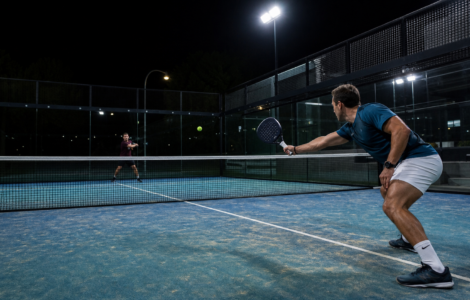
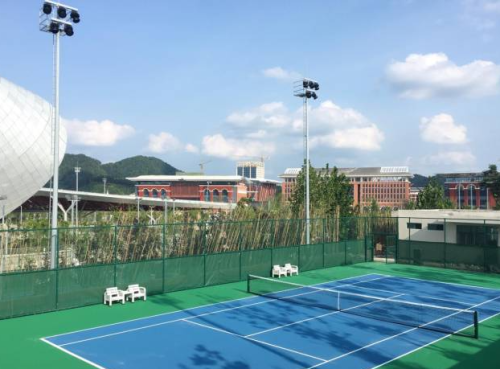
Every single sport carries its own special visual needs. Football and rugby require excellent long-range sight. On the other hand, tennis, padel, pickleball, and badminton demand much less glare. This is because these players frequently look up into the air. They also stare across very tight angles. Meanwhile, running tracks need smooth light along the edges. They cannot rely solely on a bright center zone.
When dealing with multiuse venue lighting, even coverage is just as vital as total power. Hot spots and dark shadows cause major headaches for athletes. They also ruin video recordings. A solid layout always pays attention to the following details:
- Horizontal illuminance for the field surface
- Vertical illuminance for players, balls, and spectators
- Uniformity between central and boundary areas
- Glare control from athlete and audience viewing positions
- Light spill at nearby roads, homes, and walkways
At VKS Led, we usually start with lighting design and optical selection before recommending fixtures. Our goal is not simply to add more wattage, but to place light where the venue truly needs it.
Flexible Lighting Levels For Daily Use
A multiuse field does not need one fixed lighting mode. Training, recreational play, school events, amateur matches, and broadcast-level games can have very different needs. Smart lighting controls are becoming more common because they allow operators to reduce output during lower-demand activities while keeping full power available for major events.
A practical system may include scene modes such as:
- Training mode for lower brightness and reduced energy use
- Match mode for stronger visibility and crowd experience
- Maintenance mode for safe cleaning or field preparation
- Event mode for ceremonies, concerts, or community activities
- Curfew mode with dimmed output and tighter operating hours
VKS sports lighting products can support control options such as 1-10V, DALI, and DMX512 on selected models, giving project teams more room to manage energy and event scenes. The VKS LED sports lighting range includes indoor and outdoor options for stadiums, MUGA courts, tennis, padel, pickleball, basketball, hockey, swimming pools, and other sports applications.
Key Fixture Types For Multiuse Athletic Fields
Choosing the right fixture starts with the venue layout. Pole height, field dimensions, nearby buildings, spectator areas, and sports mix all influence the best lighting type. Some venues need high-output long-throw stadium lights, while others benefit from lower-power linear lights, high mast floodlights, or solar lighting around access zones.
LED Sports Luminaires For Main Fields
For full-size pitches, stadiums, and outdoor courts, LED sports luminaires are often the core system. They are built for long-throw illumination, high mounting positions, and accurate beam control. Compared with older HID lighting, modern LED sports lights reach full brightness quickly, use less energy, and are easier to combine with controls.
The VKS L06 sports luminaire, for example, is designed for outdoor sports facilities where lighting quality, efficiency, and reliability matter. It covers a wide power range from 250W to 1800W and offers up to 190 lm/W, with multiple beam angles and intelligent control options. L06 professional sports luminaires suit stadiums, arenas, and large sports venues that need uniform light for athletes and spectators.
Material construction is also important. Die-cast aluminum housings, PC lenses, powder-coated finishes, high surge protection, and IP66 outdoor protection help fixtures work through rain, dust, heat, and long operating hours. These details may feel technical, but they directly affect maintenance cost and light quality over time.
High Mast Lighting For Large Venues And Perimeter Areas
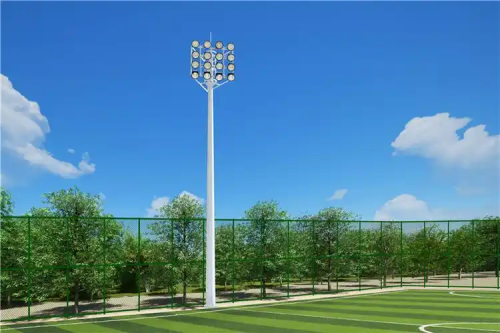
High mast sports lighting is useful when a venue needs broad coverage from tall poles. This can apply to stadiums, athletics fields, race tracks, airports, cargo terminals, parking zones, and large public grounds. The benefit is reach: fewer poles can cover a wide area when the optics and aiming are carefully planned.
The challenge is control. If the beam is too wide or poorly aimed, high mast lights can create glare, upward light, and unwanted spill. This is why modular construction, rotatable modules, and precise beam angles matter.
The VKS L02S LED high mast light uses a fin heat sink design, supports 500W to 2000W configurations, and delivers up to 190 lm/W. It is built for stadiums, ports, airports, cargo terminals, and other large outdoor projects where high output and easier maintenance are both required.
Indoor Linear Sports Lights For Courts
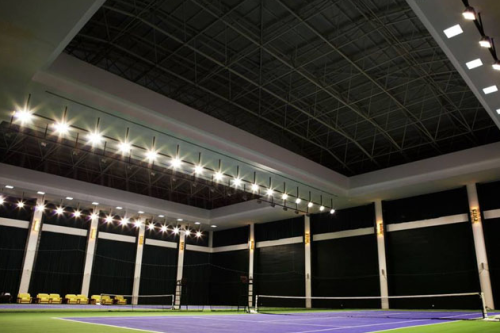
Indoor courts have a different problem: glare is often more noticeable because ceilings are lower and play is faster. In padel, pickleball, badminton, and indoor tennis, players frequently look upward or across the court. If the fixture produces direct glare, the game feels tiring even when the measured brightness seems acceptable.
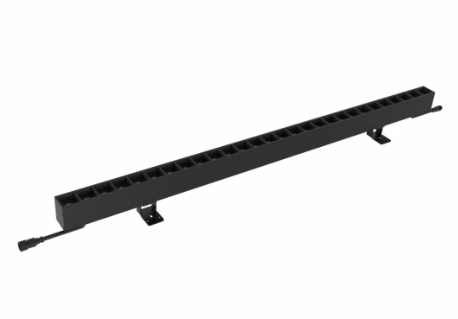
Linear indoor sports lights can create softer, more even light across smaller court layouts. The VKS Smash Series indoor linear sports court light offers low glare, multiple beam distributions, and up to 150 lm/W. It is designed for indoor padel, pickleball, badminton, and tennis venues where comfort is just as important as output. Indoor linear sports lighting can also fit gyms and community sports halls that need frequent daily operation.
Material Features That Matter In Real Projects
The material choice behind athletic field lighting affects much more than appearance. Outdoor fixtures face heat, rain, wind, dust, vibration, and electrical surges. Indoor fixtures face ball impact, dust, repeated switching, and long daily use. A reliable lighting system should be built around durability and optical stability.
Housing And Heat Management
Heat is one of the main reasons LED fixtures lose output over time. A strong aluminum housing or fin heat sink helps move heat away from the LED chips and driver. This protects performance, color stability, and service life.
For large venues, a lighter fin heat sink can also reduce installation load. That matters when fixtures are mounted high on poles or retrofitted onto existing structures. VKS high-output stadium and high mast products use aluminum structures, PC lenses, tempered glass on selected models, powder coating, and long-life designs for demanding outdoor use.
Optical Lenses And Beam Control
The lens and reflector system decide where the light goes. Multiuse venues need more than raw lumens. They need beam angles that match the field geometry, mounting height, and viewing direction.
Useful optical features include:
- Symmetric beams for general area coverage
- Asymmetric beams for side-mounted poles and reduced spill
- Narrow beams for long-throw applications
- Wide beams for lower mounting heights or smaller courts
- Low-glare optics for player comfort
- Full-cutoff or low-spill designs near neighborhoods
This is where professional lighting simulation becomes valuable. Before installation, a design team can test uniformity, glare, pole position, and spill light. Our VKS engineering team supports lighting design and simulation so clients can compare real options before committing to a layout.
Main Application Industries
Athletic field lighting serves more than professional stadiums. Many projects are built for communities, schools, private clubs, real estate groups, and public authorities. The growth of multiuse sports venues has widened the application field, especially where one site must serve recreation, training, events, and night-time public activity.
Common application industries include:
- Municipal sports parks and community recreation centers
- School and university sports fields
- Professional and semi-professional stadiums
- Football, rugby, hockey, tennis, padel, and pickleball venues
- Multiuse games areas and indoor sports halls
- Race tracks and athletics facilities
- Parking lots, plazas, walkways, and venue access roads
- Ports, airports, and large logistics areas with sports or public zones nearby
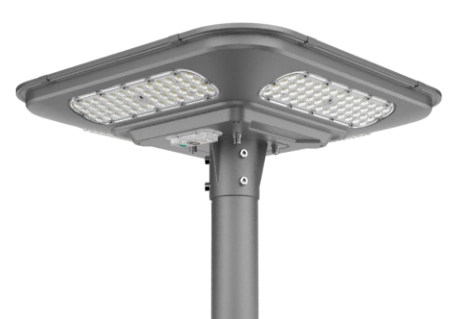
For a complete venue, main-field lighting may pair with outdoor high mast lighting, urban lighting, and solar lighting around surrounding areas. VKS LED urban lighting can support roads, parking lots, commercial spaces, gardens, and public areas, while LED solar lighting can serve parks, communities, remote paths, and off-grid access areas.
How To Choose The Best Fit
The right athletic field lighting depends on the venue’s actual use, not only the sport name. A small club does not need the same system as a broadcast stadium. A school field beside homes needs stronger spill control than a remote training ground. A venue used every night needs smarter energy control than a site used once a week.
A clear selection process should include:
- Define sports, activity levels, and expected event types
- Confirm field dimensions and pole locations
- Check mounting height and aiming restrictions
- Select lighting class based on play level
- Review glare, spill light, and neighborhood impact
- Compare power, beam angle, controls, and maintenance access
- Use lighting simulation before final purchase
For large multiuse venues, LED sports luminaires or high-output stadium lights are usually the main choice. For tall-pole, wide-area projects, high mast lights may be the better fit. For indoor courts, low-glare linear sports lights can protect comfort. For paths, parks, and low-traffic areas, solar and urban lighting can complete the site without overlighting the field itself.
Conclusion
The best athletic field lighting for multiuse venues is a system that balances visibility, comfort, control, and long-term cost. It should give players a clear view, help spectators enjoy the game, reduce light spill for neighbors, and give operators flexible scene control for different events. Materials such as die-cast aluminum, fin heat sinks, PC lenses, tempered glass, and strong outdoor protection all support reliable performance. Just as important, the optical design must match the field, pole height, and sport type. VKS Lighting offers sports, high mast, urban, and solar lighting solutions that can work together across the full venue, from the main field to the surrounding public space.
FAQs
Q: What is the best athletic field lighting for multiuse venues?
A: LED sports lighting with precise optics, smart controls, and low glare is usually the best choice.
Q: How many watts does athletic field lighting need for a multiuse venue?
A: It depends on the fixture model, quantity, pole height, and target lux, not just court size.
Q: Can athletic field lighting reduce spill light?
A: Yes. Asymmetric optics, shielding, dimming, and accurate aiming can reduce spill light effectively.