Pickleball Court Lighting Guide: Lux, Layout and Glare Control
- VKS
- Oct 16, 2026
- Blog
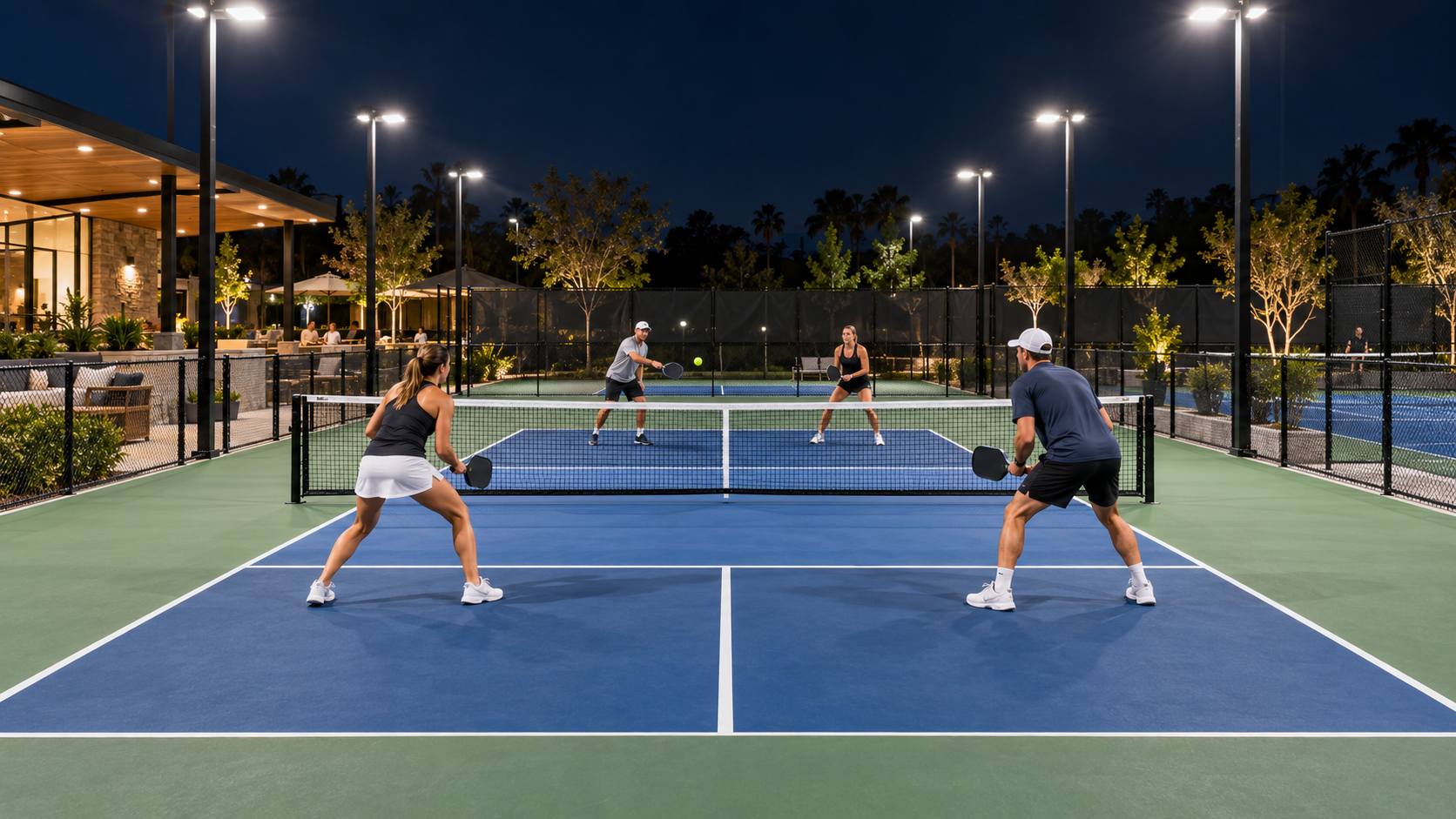
A pickleball court measures only 20 by 44 feet, so the lighting can look simple at first. In practice, the sport places high demands on visibility. The ball is small, moves quickly and often travels above eye level.
Players shift their view between the court, the net, their opponents and the sky or ceiling. A bright fixture in a common viewing direction can make the ball harder to see, even when the average illuminance is high. Good pickleball court lighting must be bright enough, even across the playing area and comfortable when players look up.
How Many Lux Does a Pickleball Court Need?
The target level depends on the use of the court. A private or community court, a commercial club and a competition venue do not need the same light.
The following values are common reference points for projects in the United States. They are a starting point, not a complete specification. Uniformity, glare, pole height and nearby properties must also be considered.
| Lighting category | Average illuminance | Approximate lux | Typical use |
| Category III | 30 fc | About 320 lux | Recreation and community use |
| Category II | 50 fc | About 540 lux | Commercial clubs and higher-level play |
| Category I | 75 fc | About 810 lux | High-level competition |
Why Average Illuminance Is Not Enough
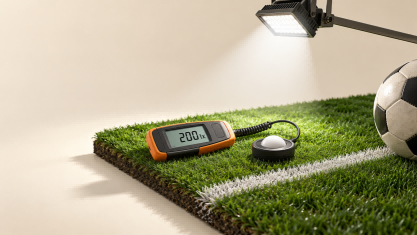
A court may average 500 lux while areas near the poles reach 800 lux and the opposite baseline falls to 250 lux. The average looks acceptable, but players still move between bright and dark zones.
Their eyes must adapt, and a fast ball can be harder to follow as it crosses different backgrounds. Pickleball court lux levels should always be reviewed together with minimum illuminance and uniformity.
Why Uniformity Is Important for Pickleball
Pickleball is played at close range and at a fast pace. A serve, third-shot drop and net exchange can move the ball through several lighting zones in a few seconds. A dark patch can make the ball seem to disappear.
Uniformity is commonly expressed as:
U0 = Emin / Eavg
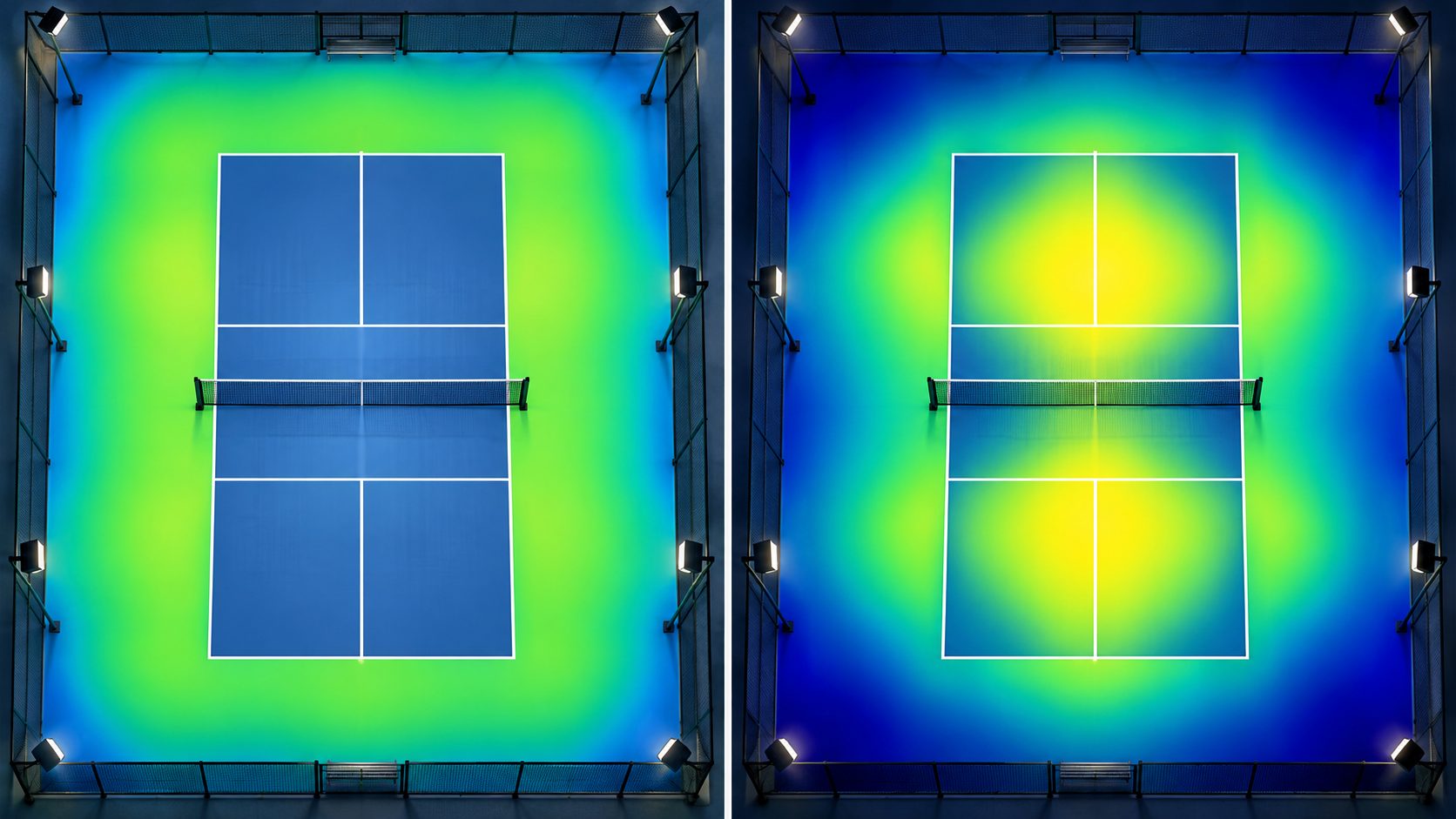
If the average is 600 lux and the minimum is 420 lux, U0 is 0.70. This will feel steadier than a court with the same average and a minimum of only 250 lux. A good LED pickleball lighting system should reduce hotspots and dark corners before it adds more peak brightness.
Why Pickleball Is Sensitive to Glare
Players look up often to follow lobs. If a bright fixture sits close to the ball's path, the light can reduce contrast and block the ball for a moment. This problem does not appear in an average lux value.
Keep Fixtures Away From Main Viewing Directions
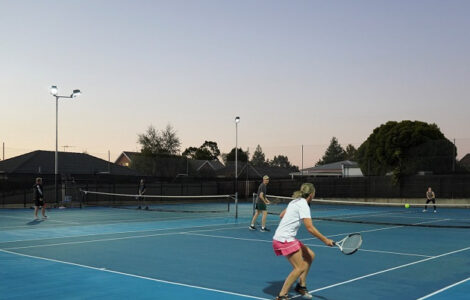
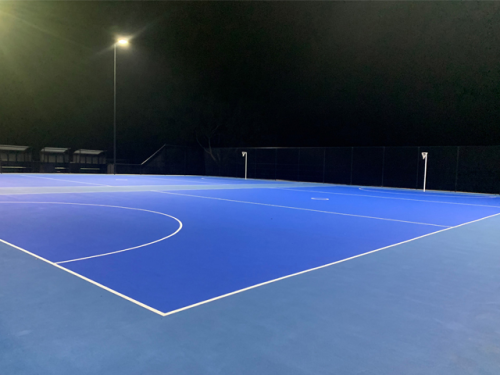
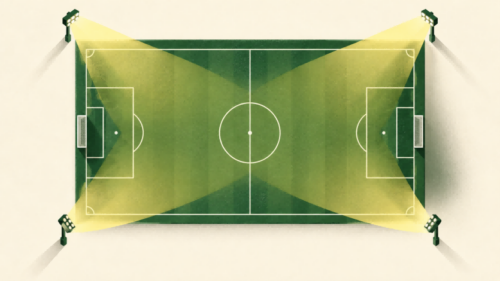
On outdoor courts, poles are usually placed along the sides. Cross-aiming from the sides keeps bright fixtures farther from the main view toward the net and opposite baseline. It also allows several fixtures to share the work.
Side lighting still needs careful aiming. The baselines, non-volley zones and center of the court must receive enough light without sending too much light into players' eyes. A good layout uses light from several directions while keeping high-brightness sources outside common sightlines.
How to Lay Out Outdoor Pickleball Court Lighting
A Four-Pole Side Layout Is Common for One Court
A standard court is 20 by 44 feet, but the lighting calculation should cover the full playable area. Players need safe space beyond the sidelines and baselines, so the model should not stop at the painted lines.
Four poles placed along the sides are a common solution. Cross-aimed fixtures can cover the court and runoff area. Poles that are too close may create glare and collision risks. Poles that are too far away require stronger long-distance optics.
Mounting Height Changes the Optical Design
Outdoor pickleball poles are often about 20 to 26 feet, or 6 to 8 meters, high. This range is not a fixed rule. Low poles are simple to build, but they need steeper aiming angles to reach the far side. That can increase glare and hotspots.
A higher mounting position often makes the light easier to spread. It can also help one pole serve more than one court in a larger facility.
How Indoor Pickleball Lighting Differs
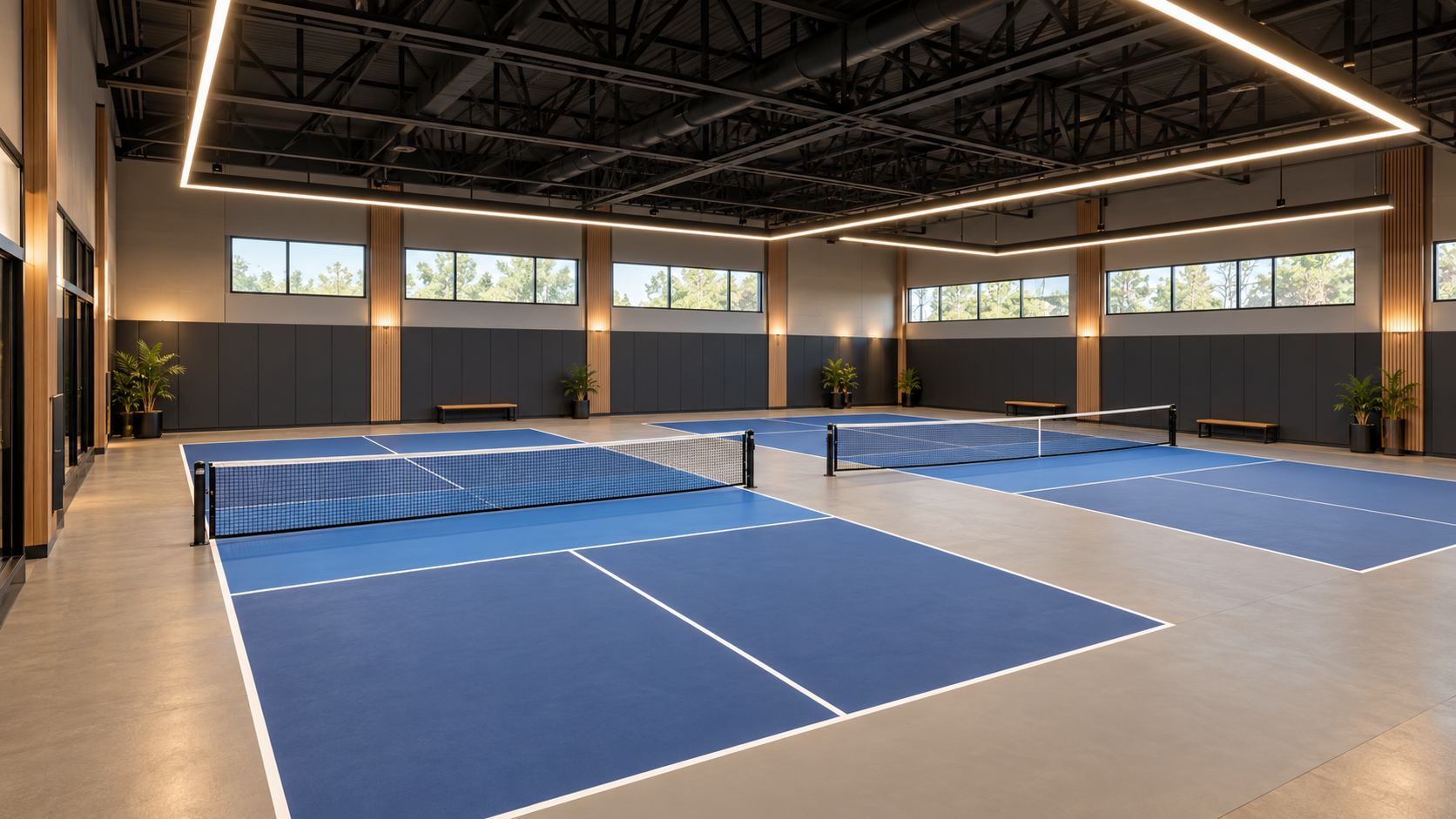
Outdoor fixtures are normally outside the playing area. Indoor fixtures must be mounted on the ceiling or roof structure, which is also where players look when tracking a lob.
A regular high-bay grid can provide enough lux, but it may place bright sources directly above the most sensitive viewing zones. Indoor design must consider roof height, suspension height, court count, fixture position, beam direction, surface brightness and reflections from walls and ceilings.
Fixture Position Matters as Much as a Low-Glare Label
A well-shielded fixture can still cause discomfort if it sits in a common upward viewing direction. Where the building allows it, perimeter or ring layouts can reduce bright points over the center of the court and direct light inward from the sides.
Why Linear and Ring Lighting Is Becoming Popular
Traditional high-bay fixtures are simple and economical, but each fixture is a concentrated light source. Linear or ring lighting spreads the output across a larger area. Deep-cell louvers and controlled optics can also reduce high-angle light.
This approach works well in premium commercial clubs where visual comfort and interior appearance are important.
How to Choose LED Pickleball Court Lights
Start With Optics, Not Wattage
A 150W fixture is not automatically better than a 100W fixture. A wide, uncontrolled beam may send light onto fences, walls or neighboring areas. A lower-power fixture with the right optics may deliver more useful light to the court.
Compare the result on the playing area, not the number on the fixture label.
Review Glare in the Actual Layout
UGR and similar values can help with product comparison, but glare depends on the observer's position, fixture angle and room or site conditions. A low-glare claim on a data sheet does not guarantee a comfortable court.
The lighting model should include the real mounting positions and main viewing directions.
Choose a Suitable CRI
CRI affects how natural the ball, court and players look. CRI 70 or above is enough for many outdoor projects. Commercial indoor clubs, video recording and competition venues often use CRI 80 or above.
Use a Practical Color Temperature
About 5000K is common in public and commercial sports facilities because it looks clear and bright. A 4000K system may feel more comfortable near homes or in clubs with a warmer interior. Higher color temperature does not always mean better visibility.
Check Long-Term Outdoor Reliability
Outdoor fixtures face rain, dust, temperature changes and electrical surges. Review the IP and IK ratings, surge protection, heat management, driver quality, seals and optical materials. The service life depends on the whole fixture, not only the LED chips.
What Changes in a Multi-Court Facility?
A multi-court project is not a simple copy of a single-court layout. Light from neighboring courts overlaps. This can improve edge uniformity, but it can also make central areas too bright.
All courts should be included in one lighting model. Shared poles may serve two adjacent courts when the mounting height and optics are suitable. The final comparison should include average and minimum illuminance, uniformity, glare, pole count, total power and construction cost.
Why DIALux Simulation Is Worthwhile
Small changes can have a large effect on a pickleball court. Moving a fixture half a meter, changing the pole height by one meter or selecting another beam angle can change the light at the baseline.
| Simulation result | What it shows |
| Average lux | Whether the general light level meets the target |
| Minimum lux | Whether the court has dark areas |
| Uniformity | How much brightness changes across the court |
| Light distribution | Where hotspots are located |
| Beam direction | Whether fixtures cover the intended zones |
| Glare analysis | Whether players are likely to see bright sources |
A complete proposal should include the illuminance results and fixture aiming information, not only a fixture quantity. For more site details, see Pickleball Court Lighting: Details That Are Easy to Miss.
Six Common Pickleball Lighting Mistakes
1. Lighting Only the 20 by 44 Foot Court Lines
The system must also cover the safety and movement area outside the lines. Players should not enter a dark zone when they move behind the baseline.
2. Using Very Low Poles to Save Cost
Lower poles need steeper aiming angles to reach the other side. This often increases glare and creates bright patches.
3. Putting Fixtures Behind the Baselines
Players spend much of the game looking toward the net and opposite baseline. Bright fixtures in that direction are easy to see.
4. Using the Average to Hide Dark Areas
A few bright points can raise the average without improving the minimum illuminance.
5. Copying a Warehouse High-Bay Layout Indoors
Warehouse users mainly look at floors and shelves. Pickleball players look up often. The visual task is different.
6. Designing One Court and Copying It Across the Facility
Light overlaps between courts. A copied layout can make the center too bright and leave the outer edges weak.
A Practical Pickleball Lighting Design Process
Begin with the number of courts, full site dimensions, indoor or outdoor conditions, roof or pole height, target illuminance, playing level and nearby properties. Record any limits on pole or fixture positions.
Build the first layout, then check minimum illuminance, uniformity and glare. Adjust positions, beam angles and aiming before selecting the final fixture count and wattage.
The best order is simple: site conditions, performance target, fixture layout, lighting simulation, optimization and product schedule.
FAQ: Pickleball Court Lighting
How many lux does a pickleball court need?
Common reference levels range from about 300 lux to more than 800 lux. Recreation and community courts can use the lower end. Commercial clubs and competition venues usually need more light and better uniformity.
How large is a standard pickleball court?
The marked court is 20 by 44 feet. The lighting calculation should also include the safety and movement space beyond the sidelines and baselines.
How many poles does one outdoor court need?
A four-pole side layout is common, but it is not mandatory. The available space, target lux, mounting height and fixture optics determine the final pole count.
How high should pickleball light poles be?
Commercial outdoor projects often use poles about 20 to 26 feet, or 6 to 8 meters, high. The final height should be confirmed with a lighting simulation.
Should an indoor court use high-bay or linear lights?
Both can work. High-bay fixtures are economical and simple to install. Low-glare linear fixtures or ring layouts often provide better control of bright sources above the players. The choice depends on roof height, budget and the position of the club.
What is the most important pickleball lighting metric?
No single metric defines a good system. Average and minimum illuminance, uniformity, glare and fixture position must be reviewed together. Uniformity and glare are especially important for a small, fast-moving ball.
Conclusion
Good pickleball court lighting does more than make the surface look bright. Players need to see the ball clearly in every part of the court and when they look up.
A four-pole side layout is a useful starting point for one outdoor court. Multi-court clubs should model all courts together, and indoor facilities should pay close attention to upward sightlines. VKS can prepare a DIALux simulation and select the fixture power, quantity and beam distribution from the actual court dimensions and mounting conditions.